UFC Fight Night brings together emerging prospects, established contenders and experienced veterans in events that can significantly influence MMA careers. Although these cards generally receive less publicity than numbered UFC shows, they follow the same core competition rules and feature meaningful divisional matchups. Understanding the structure of preliminary fights and main events, the differences between three-round and five-round contests, and the criteria used by MMA judges reveals how these events work. Fighter preparation, official weigh-ins, medical oversight and venue operations also play essential roles in bringing each Fight Night to the Octagon.
A UFC Fight Night can open with two relatively unknown fighters and end with a five-round contest between established contenders. The stakes vary from one bout to the next. A prospect might be trying to break into the rankings, while a veteran could be defending a hard-earned position in a competitive division.
Unlike numbered UFC events, which generally receive greater promotion and often feature championship fights, Fight Nights are a regular part of the organization’s schedule. They give rising competitors opportunities to establish themselves and experienced fighters a chance to move closer to title contention. Both formats operate under the same core competition framework.
The UFC Fight Night format makes room for prospects and established contenders on the same card. That combination can give an early bout as much competitive significance as a heavily promoted headliner.
What Makes UFC Fight Night Different From Numbered UFC Events?
The UFC organizes its calendar around numbered events, such as UFC 300, and Fight Night cards. Both feature professional mixed martial arts contests, but the promotion builds them for different audiences and competitive needs. Numbered events usually receive greater publicity and feature championship bouts, established stars or important rivalries.
Fight Nights tend to have a smaller profile, although their main events can still affect the title picture. A victory over a highly ranked opponent may move a contender closer to a championship opportunity, regardless of the event’s name. There are exceptions.
Fight Night cards have occasionally featured championship bouts, and numbered events do not always include title fights. Event classification is primarily a matter of scheduling, promotion and distribution rather than a difference in competitive rules. Venues also vary.
Some Fight Nights take place at the UFC Apex in Las Vegas, a compact production facility that accommodates a smaller audience. Others are staged in major arenas, particularly during international events. The UFC Fight Night schedule includes both settings, depending on the promotion’s plans. Broadcast access depends on the country and the agreements in place.
Viewers should consult official UFC listings or their local broadcaster for current event coverage.
How a UFC Fight Night Card Is Structured
A UFC fight card normally consists of preliminary bouts followed by a main card. The number of fights varies, and the final lineup can change because of injuries, medical issues, travel complications or withdrawals. Each matchup is arranged within a weight division or under an approved catchweight agreement. The bout order generally builds toward the headline contest, but placement on the card does not determine a fight’s competitive importance.
Preliminary Fights
The UFC prelims open the event and often feature newcomers, developing prospects and experienced competitors attempting to improve their standing. Consider a fighter positioned just outside a division’s top fifteen. Beating an established opponent could lead to a matchup against a ranked competitor.
A defeat might delay that opportunity, although a competitive performance against strong opposition can still influence future matchmaking. Preliminary fights are official professional contests. They count toward fighters’ records and follow the same applicable rules as main-card bouts.
Most non-championship prelims are scheduled for three five-minute rounds, separated by one-minute breaks. A fighter’s placement on the prelims does not necessarily reflect a lack of ability. UFC fighters can move between prelims and main cards as the promotion builds new matchups.
Scheduling considerations, divisional depth and the appeal of other matchups can all influence the running order.
Main Card and Main Event
The UFC main card features the event’s principal matchups. These may involve ranked contenders, recognizable veterans or opponents whose contrasting fighting styles promise an interesting contest. The final bout is the UFC main event, the matchup given top billing. It normally consists of five five-minute rounds, even when no championship is at stake.
Most other non-title contests are scheduled for three. Those additional rounds affect preparation and tactics. A fighter who relies on explosive wrestling may need to manage energy carefully, while a pressure striker must consider whether an aggressive opening pace can be maintained over twenty-five minutes.
The longer format can also give fighters more time to make adjustments. Someone struggling with an opponent’s timing early may find opportunities later as movement slows or defensive habits become easier to recognize. Five rounds represent the maximum scheduled duration, not a requirement.
A knockout, submission or referee stoppage can end the fight at any point.
UFC Weight Classes and Fight Formats
UFC weight classes are designed to keep competitors within established size limits. The men’s categories range from flyweight at 125 pounds to heavyweight at 265 pounds. The women’s divisions include strawweight at 115 pounds, flyweight at 125 pounds and bantamweight at 135 pounds.
The UFC has also held women’s featherweight contests at 145 pounds, although that division has not maintained the same level of activity. For non-title fights, competitors generally receive a one-pound allowance above their division’s official limit.
For heavyweight non-title bouts, the usual allowance permits a maximum of 266 pounds where the applicable rules authorize it. Championship bouts require fighters to meet the division’s exact limit. Catchweight fights may be negotiated during matchmaking or arranged after a competitor misses weight.
Any revised agreement must meet the requirements of the relevant regulatory authority. Weight classes help reduce size disparities, but they do not eliminate differences in reach, strength or physical build. Those characteristics can still influence how a matchup develops.
Rules, Scoring and Ways to Win a Fight
UFC contests generally follow the Unified Rules of Mixed Martial Arts, subject to the regulations adopted by the authority overseeing each event. These MMA rules define what fighters can do and when officials must intervene. These MMA fights permit striking, wrestling, clinch fighting and submissions.
Competitors can exchange punches and kicks, attempt takedowns, establish ground control and attack with legal submission holds. Prohibited actions include eye gouging, biting, intentional groin attacks and strikes to the back of the head.
Some technical definitions and enforcement procedures vary between jurisdictions, so UFC Fight Night rules can differ in limited details from one location to another. The referee supervises the fight and can intervene when a competitor cannot defend intelligently, a submission creates an immediate danger or a foul requires action.
Knockouts, Submissions and Decisions
A knockout, or KO, typically occurs when a legal strike leaves a fighter incapacitated. A technical knockout, or TKO, is recorded when the referee stops the contest because a competitor can no longer defend effectively or safely continue. Not every TKO follows repeated unanswered strikes. An injury may also require medical intervention.
A ringside physician can determine that continued competition is unsafe, with the official result depending on the circumstances and cause of the injury. Submissions offer another way to win. A fighter may force an opponent to tap through a choke or joint lock.
The referee can also stop a submission attempt if the opponent loses consciousness or cannot continue safely. When a contest reaches its scheduled conclusion, three judges normally determine the result. Common decision outcomes include:
- Unanimous decision: All three judges select the same winner.
- Split decision: Two judges favor one fighter, while the third selects the opponent.
- Majority decision: Two judges select the same winner, while the third scores the contest a draw.
- Draw: The combined scorecards produce no overall winner under the applicable scoring rules.
Other possible outcomes include disqualification, technical decisions and no contests. Their application depends on the nature of an incident and the governing rules. Official UFC fight results identify the outcome and the method by which the contest ended.
How Judges Score MMA Rounds
Under UFC judging criteria, officials use the 10-point must system. Three judges score each round independently, normally awarding ten points to the winner and nine or fewer to the opponent. Effective striking and grappling are the primary criteria.
Judges consider the impact of legal attacks and meaningful offensive grappling rather than simply counting strikes or rewarding time spent in a dominant-looking position. Effective aggression becomes relevant when effective striking and grappling are equal. Fighting area control is considered only when the preceding criteria do not establish an advantage.
For example, a fighter might spend much of a round pressing an opponent against the fence without landing meaningful attacks. That position alone does not necessarily outweigh the opponent’s more effective offense. A 10-8 round may be awarded when one fighter establishes a clear, substantial advantage. Judges assess impact, dominance and duration.
Particularly damaging offense can carry significant weight even without prolonged control. A 10-7 score is possible in exceptionally one-sided rounds but remains rare. Each round is scored separately. A strong final-round performance cannot erase points already lost, which explains why a fighter can finish aggressively and still lose a decision.
How Fighters Prepare for UFC Fight Night
Preparation begins once a matchup is confirmed. Coaches study the opponent’s habits, strengths and weaknesses before adjusting the training plan. Against a strong wrestler, a fighter may focus on takedown defense, cage positioning and returning to the feet.
Facing a dangerous striker could require more work on distance management, defensive reactions and interrupting combinations. Training camps combine technical sessions, sparring, grappling, conditioning, strength work and recovery. Their structure depends on the athlete’s experience, physical condition and available preparation time.
Video analysis helps identify patterns. A fighter who repeatedly drops a hand after throwing a combination may leave an opening for counters. Someone who relies on the same takedown entry may become easier to defend once that habit is recognized. Weight management is another important part of preparation.
Official weigh-ins usually take place the day before competition. Some fighters use short-term weight-cutting methods, although aggressive dehydration can create serious health risks and impair performance. Fight week also involves medical examinations, licensing procedures, rules meetings and equipment checks, depending on the jurisdiction.
By the final day, there is little time left to improve conditioning. Attention shifts toward nutrition, rehydration, rest and executing the tactical plan.
What Goes Into Organizing a UFC Event
A late withdrawal can disrupt an entire card. If a fighter fails a medical examination or cannot travel, matchmakers may need to find a replacement while broadcasters adjust their running order. UFC event organization therefore involves more than booking a venue. The promotion, athletes, medical teams, regulators and production crews must coordinate until the final bout is complete.
Venue Setup and the Octagon
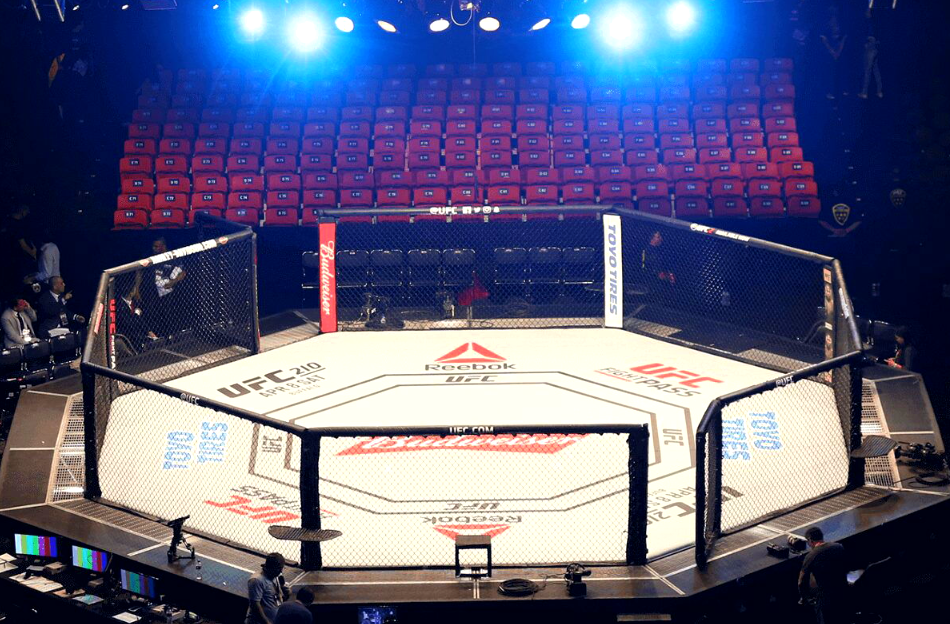
The UFC Octagon is the promotion’s trademarked eight-sided fighting enclosure. Its fence plays an important tactical role during clinches, takedowns and defensive exchanges. A wrestler may drive an opponent toward the fence to restrict movement and establish control.
The defending fighter can use the enclosure for balance, underhooks, or support while attempting to stand. Venue preparation includes installing and inspecting the fighting surface, positioning cameras, arranging lighting, and ensuring access for competitors and medical teams. The UFC Apex provides a controlled production environment.
Larger arenas require additional planning for crowd management, security and spectator facilities. Enclosure dimensions can also influence tactics. A smaller fighting area gives competitors less room to circle away from pressure, potentially creating more close-range exchanges. Whether that benefits either fighter depends on their individual styles.
Medical Checks, Weigh-Ins and Event Operations
Athletic commissions and other relevant authorities establish medical and regulatory requirements for professional MMA events. The official weigh-in determines whether competitors meet their contracted limits. Missing weight can result in financial penalties, changes to the agreement or cancellation of the bout.
A fight may still proceed at an approved catchweight if the necessary parties agree and the regulator permits it. Missing weight does not automatically mean losing the contest. Officials inspect gloves and other regulated equipment. Referees and judges are appointed under the applicable oversight procedures, which vary by jurisdiction.
Medical personnel remain available throughout the event. Following a bout, a fighter may receive a medical suspension restricting competition and, in some cases, contact training until recovery requirements are satisfied. Behind the scenes, organizers also coordinate athlete transportation, bout order, backstage preparations, and broadcast timing.
The Live UFC Fight Night Experience
A Fight Night audience may see an unfamiliar prospect produce the evening’s most memorable finish, followed by a closely contested main event with important consequences for the rankings. Between bouts, officials inspect the competition area while production crews prepare the next segment.
Fighter introductions, equipment checks and final referee instructions take place before the opening round. Broadcast coverage generally includes commentary, replays, statistics and post-fight interviews, although presentation varies between broadcasters. The atmosphere depends partly on the venue.
Large arenas can become particularly loud when local fighters compete. At the UFC Apex, the smaller setting often makes corner instructions and the sounds of exchanges more noticeable. Fight Nights also provide a useful view of how competitive the UFC roster can be.
A developing fighter may face an experienced opponent capable of exploiting small technical mistakes, while an established contender may need several convincing performances to earn another major opportunity.
FAQ
Is UFC Fight Night different from regular UFC events?
UFC Fight Night is part of the promotion’s regular schedule. These events generally receive less publicity than numbered cards, but the contests follow the same applicable professional MMA rules. Championship fights are uncommon on Fight Night cards, although they have occurred.
How many fights are on a UFC Fight Night card?
There is no fixed number. A typical event features preliminary bouts followed by a main card, often totaling around 10 to 14 fights. The lineup can change because of injuries, medical issues or withdrawals.
Are UFC Fight Night main events always five rounds?
UFC Fight Night main events are normally scheduled for five five-minute rounds. A fight can finish earlier through knockout, submission, referee stoppage or another official outcome.
How are UFC Fight Night winners determined?
Competitors can win by knockout, technical knockout, submission or judges’ decision. Disqualifications and technical decisions are also possible. When a fight reaches its scheduled conclusion, three judges normally determine the result using the 10-point must system.
Where can viewers find the UFC Fight Night schedule and results?
The UFC’s official website provides event listings, scheduled matchups and recorded results. Broadcast availability depends on the country and current distribution agreements.