Pro wrestling brings together athletic skill, live entertainment and storytelling through matches, rivalries and championships. From singles and tag team contests to battle royals and major live events, each format offers a different experience. Behind the action, wrestlers rely on physical training, technical ability and carefully planned performances to engage audiences around the world.
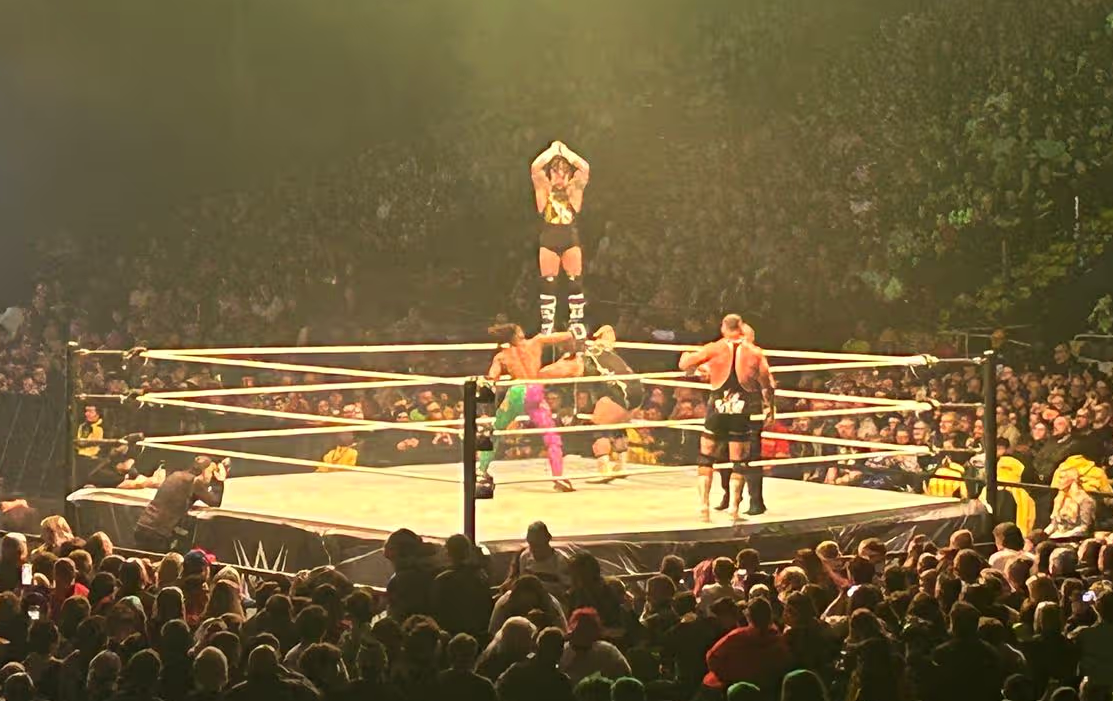
A wrestler climbs the turnbuckle while an opponent struggles to stand. The crowd senses what might happen next. A dive from the top rope could end the match, or the opponent might recover just in time to counter it. Either way, the anticipation is part of the experience.
Professional wrestling combines athletic performance with live entertainment. Match outcomes are planned, but the physical demands are real. Wrestlers execute difficult moves, absorb impacts, and rely on timing and cooperation to make the action believable.
From independent shows in small venues to major international events, pro wrestling has developed into an industry with distinct styles, traditions, and audiences. Understanding its appeal means looking at the rules, match formats, training, and storytelling behind the action.
How Professional Wrestling Combines Sport and Entertainment
Unlike amateur wrestling, professional wrestling is not an unscripted athletic competition. Promoters or creative teams generally decide winners in advance, a process known as booking. Wrestlers then work together to deliver the planned result.
That does not mean every movement is rehearsed. Performers often agree on important sequences and the finish while leaving room to adjust the action. Timing, positioning, and crowd reactions can all influence what happens between those moments.
The physical demands remain considerable. Wrestlers need strength, balance, endurance, and the ability to perform controlled movements under pressure. Even a short match can involve repeated falls, lifts, and sudden changes of direction.
Character work is equally important. Entrance music, costumes, interviews, and signature moves help wrestlers establish recognizable identities. Traditional heroes are known as babyfaces, while antagonists are called heels. Some performers move between these roles as storylines develop.
Another important concept is kayfabe, the practice of presenting wrestling’s fictional conflicts and characters as part of a believable world. Although modern promotions openly acknowledge the scripted nature of wrestling, maintaining that illusion during a match remains essential.
The Evolution of Pro Wrestling Events
Modern professional wrestling grew out of competitive grappling traditions and traveling athletic exhibitions during the nineteenth and early twentieth centuries. Catch-as-catch-can wrestling was particularly influential in Britain and North America.
As promoters recognized the entertainment value of dramatic contests, predetermined results became increasingly common. This allowed them to develop rivalries, build recognizable attractions, and maintain audience interest across multiple events.
Regional territories dominated much of the North American industry during the twentieth century. Promotions operated within particular markets, maintained championships, and organized regular shows. Wrestlers frequently moved between territories.
Television gradually changed that structure. During the 1980s, the World Wrestling Federation, now WWE, expanded nationally and reached audiences far beyond traditional regional markets. The first WrestleMania in 1985 helped establish the model of a major annual wrestling spectacle.
Competition between WWF and World Championship Wrestling intensified during the 1990s. Their Monday night television rivalry brought wrestling to a wider audience and made weekly programming central to the industry.
Distinct traditions also developed internationally. Japanese puroresu includes hard-hitting approaches associated with strong style, technical grappling, and other performance styles. Mexican lucha libre is known for masks, aerial wrestling, and the traditional rivalry between técnicos, generally heroic characters, and rudos, their antagonistic counterparts.
Today, WWE, All Elite Wrestling (AEW), New Japan Pro-Wrestling (NJPW), and Consejo Mundial de Lucha Libre (CMLL) represent different approaches to professional wrestling. Streaming and international distribution have made their events accessible to audiences worldwide.
Inside a Professional Wrestling Match
A wrestling match has a planned outcome, but performers must make the journey toward that result convincing.
Many traditional matches open with basic grappling exchanges. Wrestlers establish control through holds, counters, and positioning before increasing the pace. Other contests begin with immediate attacks, particularly when an intense rivalry is involved.
Performers must remember important sequences while monitoring their opponent’s movements. A counterattack only works when both wrestlers get their timing right. Mistakes can make a sequence look awkward or create genuine injury risks.
Crowd reactions can also affect the pace. Wrestlers may pause after a major move, extend a confrontation, or adjust the timing of a comeback.
Match Rules and Ring Structure
Most North American promotions use a four-sided wrestling ring, although other configurations exist. The ropes attach to corner posts through turnbuckles, usually covered by protective pads. The canvas covers a padded surface supported by the ring’s underlying structure.
Standard matches generally recognize several ways to finish:
- Pinfall: Holding an opponent’s shoulders against the mat for a three-count.
- Submission: Forcing an opponent to surrender, usually by tapping or verbally submitting.
- Count-out: Failing to return to the ring before the referee completes the required count.
- Disqualification: Breaking a rule that carries disqualification under the match’s regulations.
- Referee stoppage: Ending a match when a wrestler cannot continue, whether through a planned finish or a genuine safety concern.
Rules vary between promotions. In many traditional matches, grabbing a rope while trapped in a submission hold requires the opponent to release it. Referees typically begin a five-count if the hold is not immediately broken.
Special stipulations can change these conditions. No-disqualification matches, for example, remove disqualification as a possible finish, allowing actions that would normally violate the rules.
Referees also help coordinate the match, communicate with performers, and monitor their safety.
Wrestling Moves and Performance Techniques
Professional wrestling draws on grappling, gymnastics, striking techniques, and stunt performance. Its moves can be divided into several categories.
Strikes include punches, chops, forearms, and kicks. Wrestlers control distance and contact to create a convincing impact while limiting unnecessary risk.
Throws and slams bring an opponent to the mat through controlled lifting or movement. Suplexes, body slams, and powerbombs are common examples.
Submission holds use controlled pressure to create a convincing struggle. Boston crabs, figure-four leglocks, and arm-based holds can also establish an opponent’s weakness during a match.
Aerial moves include dives, splashes, and attacks from the ropes or turnbuckles. These techniques require precise timing and awareness of where an opponent will be positioned.
Wrestlers also learn to take falls, known as bumps. Training focuses on body positioning and distributing impact where possible. These techniques reduce certain risks but cannot prevent every injury.
Another essential skill is selling, or reacting convincingly to an opponent’s offense. A wrestler favoring an injured shoulder, for instance, may struggle with lifting moves later in the match.
The opposite, no-selling, involves showing little or no reaction to an attack. It can be used deliberately to portray an unusually powerful character, although excessive use may weaken the credibility of an opponent’s moves.
Popular Match Formats
Promotions use different match formats to create variety and develop rivalries. Some follow traditional rules, while others introduce additional wrestlers, weapons, or alternative victory conditions.
Singles and Tag Team Matches
A singles match features two wrestlers competing individually. It is commonly used for championship contests, personal rivalries, and matches highlighting technical ability.
Styles vary considerably. Some wrestlers rely on grappling and submissions, while others emphasize striking, power moves, or aerial attacks.
Tag team matches usually involve two teams of two wrestlers, although larger teams are possible.
Under conventional rules, one wrestler from each team is legally active. Partners exchange places through tags, and referees restrict interference from teammates outside the ring.
A familiar sequence involves one wrestler being isolated from their partner before finally reaching the corner. The resulting hot tag often changes the pace, allowing the fresh teammate to launch a comeback.
Tag matches also feature coordinated attacks, although the legality of double-team moves depends on the promotion’s rules.
Battle Royals and Championship Matches
Battle Royals involve multiple wrestlers competing under elimination rules.
In WWE’s traditional over-the-top-rope format, elimination occurs when a wrestler goes over the top rope and both feet touch the floor. Leaving through or beneath the ropes does not count.
The Royal Rumble uses staggered entrances, with participants joining at scheduled intervals. This creates opportunities for surprise appearances and unexpected confrontations.
Other formats use different conditions. In hardcore matches, weapons and fighting outside the ring may play a larger role. Ladder matches typically require wrestlers to retrieve an object suspended above the ring rather than win through a conventional pinfall.
Championship matches are defined by the title at stake, not by a separate set of rules. They can take place under singles, tag team, or special stipulations.
Under many traditional rules, championships do not change hands through count-out or disqualification unless the match stipulations explicitly allow it.
How Wrestling Promotions Organize Live Shows
Producing a wrestling event requires coordination between performers, referees, medical staff, security, and production crews.
In larger promotions, creative teams oversee long-term storylines, while producers or agents help wrestlers plan individual matches. The amount of creative freedom varies between organizations.
The running order matters. Opening matches often establish the show’s energy, while later contests build toward the main event.
Televised productions must also account for commercial breaks, camera placement, interview segments, and broadcast schedules.
Independent promotions generally operate with smaller crews and simpler production setups. Their shows can offer more direct interaction between wrestlers and spectators.
The Physical Training Behind Professional Wrestling
Training usually begins with ring movement, balance, and controlled falling techniques before students attempt complicated moves.
Beginners practice running the ropes, performing rolls, taking bumps, and working through basic grappling exchanges. Learning how to protect an opponent is just as important as executing a move correctly.
Strength training supports lifting and body control. Cardiovascular conditioning helps wrestlers maintain their pace, while mobility work improves movement and coordination.
Students also develop communication skills. During a match, performers must recognize positioning mistakes and adjust sequences without increasing the risk of injury.
Character presentation is another part of training. Interviews, facial expressions, entrance routines, and audience interaction help wrestlers develop a recognizable presence.
Many performers begin at wrestling schools and gain experience through independent promotions. Advancement depends on athletic ability, reliability, character work, and opportunities within the industry.
Repeated impacts, travel, and irregular schedules make recovery particularly important. Medical supervision and proper preparation reduce risks, but professional wrestling remains physically demanding.
Championships, Rivalries and Storytelling
Championships establish status within a promotion and give performers recognizable goals. Their significance comes from memorable defenses, established rivalries, and consistent presentation.
Because title changes are booked rather than determined through unscripted competition, the story surrounding a championship often matters as much as the match itself.
Rivalries, commonly called feuds, may begin with interference, a betrayal, or a disputed result. Matches and interviews then develop the conflict toward a major confrontation.
Character changes can alter those relationships. A heel turn moves a wrestler into an antagonistic role, while a face turn shifts a character toward becoming a crowd-supported protagonist.
Promotions also organize tournaments to establish championship challengers or create unexpected matchups.
Some feuds develop over months or years, while others rely on a straightforward competitive dispute. Effective storytelling gives the audience a reason to care about the outcome beyond the championship or victory itself.
The Experience of Attending a Live Wrestling Event
Watching professional wrestling in person differs considerably from following a television broadcast.
Television uses commentary, close-ups, and replays to direct attention. At a live event, spectators can follow the entire ring and observe interactions that cameras might miss.
The audience contributes to the atmosphere through chants, cheers, and hostile reactions. Wrestlers often acknowledge these responses or adjust their timing accordingly.
Entrance music and lighting can be major attractions, especially at large arena shows. Smaller events may offer a more intimate atmosphere and closer interaction with performers.
Seating also affects the experience. Ringside positions bring spectators closer to the action, while elevated seats may provide a clearer view of the entire ring.
Major events frequently include merchandise stands, fan activities, and additional programming. Independent shows usually offer a simpler experience centered on the matches themselves.
For many fans, the biggest difference is hearing the crowd react without the filtering of a television broadcast.
FAQ
Is professional wrestling a real sport?
Professional wrestling requires genuine athletic ability, conditioning, and technical skill, but match outcomes are predetermined. It is a scripted form of athletic entertainment rather than an unscripted competitive sport.
Are pro wrestling matches completely scripted?
Winners and major sequences are generally planned, but not every movement is rehearsed. Wrestlers may adjust portions of a match according to timing, crowd reactions, and circumstances inside the ring.
What is the difference between a singles match and a tag team match?
A singles match involves two individual wrestlers. A standard tag team match features two teams, usually with one legally active wrestler from each side. Partners exchange places through tags.
How do professional wrestlers train?
Training includes controlled falling, grappling, ring movement, strength and cardiovascular conditioning, and performance skills. Wrestlers also learn to communicate with opponents and adapt movements during matches.
Why are wrestling championships important if results are predetermined?
Championships establish status, support rivalries, and provide long-term storytelling goals. Their prestige depends on their history, presentation, and the significance of the matches fought over them.